Fashion & Land

Unraveling the

impacts of fibres

Our clothes come from the land, and more often than not, they return to the land

The production of raw materials for textiles carries the risk of significant negative impacts on land, such as degradation, soil erosion, overgrazing, desertification, deforestation, freshwater depletion, pollution, waste, biodiversity loss, carbon emissions and climate change.

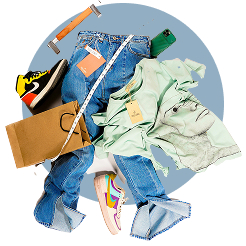
In the last two decades, global fibre production has more than doubled from 58 million tons in 2000 to a new record of 124 million tons in 2023. If business continues as usual, the fibre market is expected to continue growing rapidly, reaching 160 million tons by 2030. Around 60% of all the textiles produced are used in clothing. Less than 1% of all material used to produce them is recycled into new clothing. Of all the fibre used for clothing, 87% is landfilled or incinerated.
By 2030, the fashion industry is expected to use 35% more land – much of it to grow materials for cheap and throwaway fashion.
01 Breaking down the fibres by impact

Cotton

The Ubiquitous
Land User

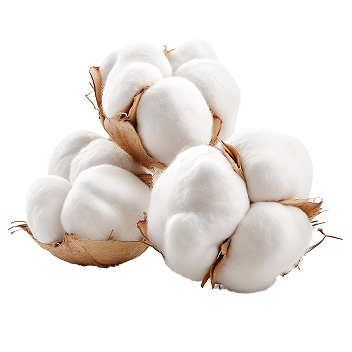
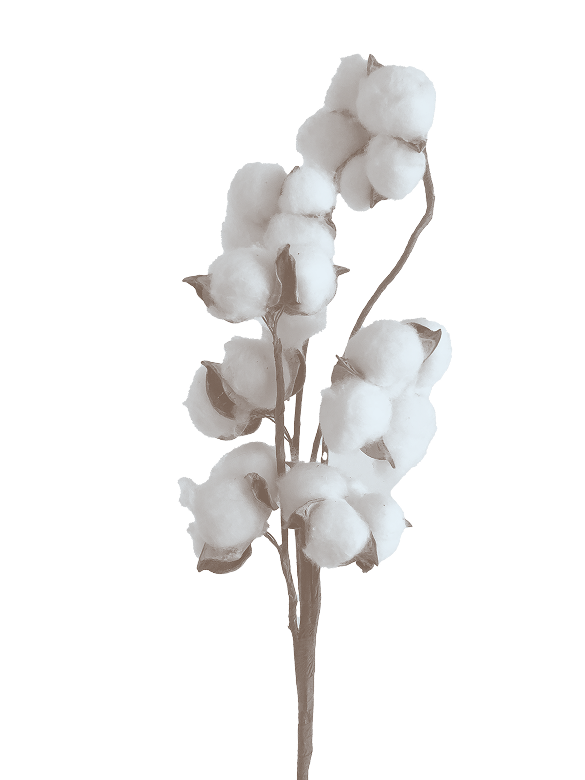
Cotton is the most used natural fibre in the world and the second most produced fibre in the textile industry. The fabric is comfortable, breathable and hard-wearing.

Yet its cultivation comes at a cost to the land: large-scale cotton cultivation depletes the water resources of drier regions, and the industry depends heavily on chemical fertilizers, herbicides and insecticides which can result in land degradation through salinization and erosion.
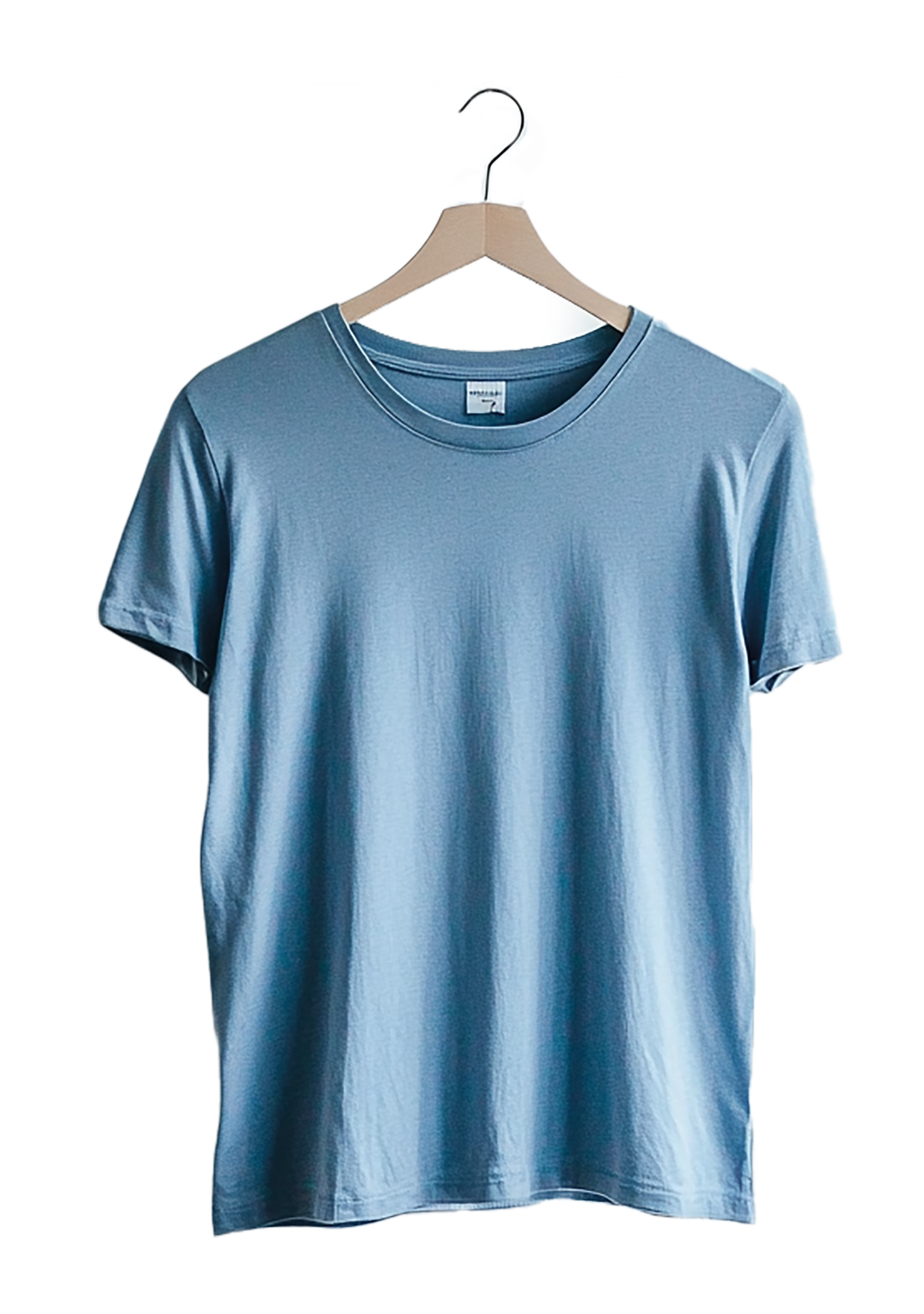
Between 2 and 2.5m² of land is needed togrow the cotton for one T-shirt in the US.

Negative Impacts

Negative land impacts of large-scale, cotton production can include:

4%
of pesticides sold worldwide go into cotton farming.
10%
of insecticides sold worldwide go into cotton farming.
20%
of global fibre production is cotton.
2.5%
of arable land worldwide is used for cotton cultivation.

What are the alternatives to conventional cotton farming?

There are four main alternatives to conventional cotton:

1
Organic cotton
2
Cotton licensed or certified under Voluntary Standard Systems
3
Recycled cotton
4
Other fibres
02 Breaking down the fibres by impact

Wool

Luxury fibre with a deep connection to land

Obtained primarily from sheep, which dominate this category, but also from goats, yaks, camels and alpacas, wool enjoys the image of a natural and environmentally friendly material. The reality, however, is nuanced.

Negative Impacts

Negative land impacts of large-scale, unsustainable wool production can include:

Overgrazing
leading to land degradation.
Deforestation and habitat loss
to create more pasture for grazing animals.
Water and soil pollution
from pesticides to keep livestock parasite-free and chemicals used to wash wool.
Loss of biodiversity and exclusion
of wild grazing species that compete with livestock for forage and space.
High emissions of methane
a potent greenhouse gas, from ruminants such as sheep and goats
Through sustainable practices, well-managed rangelands, and the adaptation of voluntary standards, which bring transparency andassurance on animal welfare and environmental concerns, risks to land can be minimized, avoided or even mitigated.
03 Breaking down the fibres by impact

Linen & Hemp

A long-lived tradition of sustainability

Plant-based fibres, including bast fibres such as jute, flax, hemp and others, have a global market share of about 5% excluding cotton and wood-based fibres. If farmed carefully, plant-based fibres can be more environmentally sustainable than cotton, wool or synthetics.

Linen: the resilient one.
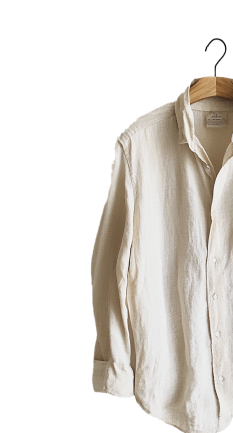
Linen is made of fibres won from the stem of the flax plant. Based on estimates around 0.4 million tons of flax are produced each year, equivalent to almost 0.3% of global fibre production. Compared to cotton, linen is more labour intensive, time consuming, and costly. It is, however, relatively sustainable. Flax is a carbon sink crop (meaning it absorbs more CO2 from the atmosphere than it releases) and is naturally pest-resistant, drought-tolerant, and regenerative. Flax also has a short growth cycle, so is often cultivated between the growing seasons of other crops.
0.4 million
tons of flax produced yearly
0.3%
of global fibre production
0.2 million
tons produced in 2023
0.2%
of global fibre production
Hemp: The controversial one
Sharing many of the characteristics of flax, including its resistance to disease and ability to capture carbon, hemp can also be counted as a more environmentally friendly crop. The plant can support soil health and biodiversity, suppress weeds and be part of a crop rotation system that boosts yields. While tending to be a little scratchy on the skin, hemp fabric is breathable, antibacterial, thermoregulating and highly resistant. It also softens over time. An estimated 0.2 million tons of hemp were produced in 2023, representing 0.2% of the global fibre market.
04 Breaking down the fibres by impact

Wood Based Fibre

A deforestation risk or a sustainable solution to land degradation?

Man-made cellulosic fibres (MMCFs), such as viscose, lyocell, modal, acetate, and cupro are most commonly made from wood pulp. Cellulose, a chief part of the cell walls of plants, is extracted from the pulp of trees, such as beech, birch, eucalyptus, fir and poplar, or from bamboo. Fabric made from these fibres is often soft, breathable and absorbent.

Over the past decade, MMCFs have received increasing attention as more environmentally friendly alternatives to other fibres, such as cotton or synthetics.
At 7.9 million tons in 2023, accounting for about 6% of global fibre market, production has more than doubled since 1990 and is expected to continue to grow in the coming years.

Because they are wood-based and renewable, MMCFs can have less of a negative environmental impact when compared to any other fibres. If managed sustainably, the forests can maintain or even enhance their biodiversity, make the forest ecosystems resilient and preserve soil and water quality.

There is a growing trend towards more wood-based fibres and more certified traceability of raw material sourcing, which increases transparency of the MMCF sourcing.

In 2023, 60-65% of MMCFs were FSC or PEFC certified,  but expanding responsible forestry practices and closed-loop production is essential.

04 Breaking down the fibres by impact

Oranges & Co.

Agricultural waste fibres turn trash into resource

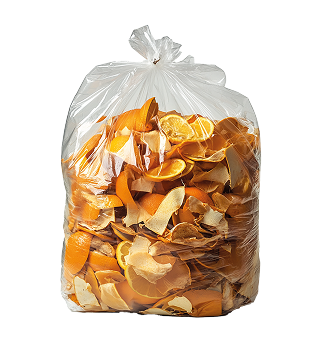
Scientists and industry looking for a solution to the puzzle of sustainable fashion are also looking to a new source of recyclable materials: agricultural waste. Byproducts of the global agri-food sector such as fruit peel, seed oil, plant leaves and biogas can be used to make man-made cellulosic fibres (MMCFs) from material that would otherwise have been burned or gone to waste. While research on some options is still at an early stage, othersare being pushed by startups and gaining traction.

Orange Fibre extracts cellulose from the peel of oranges grown for their juice, which produces 700,000 tons of orange waste a year in Italy. The company, which began as a university project, transforms the peel into a silk-like fabric. The citrus cellulose has also already been incorporated into a lyocell fabric.
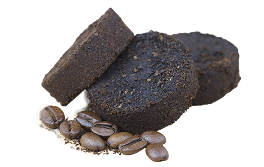
Coffee ground fibre
To feed the world’s demand for caffeine, farmers produce more than 10 million tons of coffee beans every year. But once the roasting, grinding and brewing are done, weare left with millions of tons of waste. Under the name S.Café®, the company SingTex has been combining leftover coffee grounds with polyester from recycled plastic bottles since 2009.
05 Breaking down the fibres by impact

Synthetics

Non-biodegradable fibres leave their footprint on land

The rise of synthetic fibre and fabric starting in the mid-1990s has enabled the emergence of fast fashion, with cheap clothing produced for the mass-market and styled according to the latest trends. Today, more than two thirds of all clothes produced are made from synthetic fibres, such as polyester or polyamide (nylon), which are plastics derived from oil and gas.

Key facts

Negative land impacts of synthetics production can include:

67%
of clothes are made from polyester and other synthetic fibres derived from fossil fuels.
87%
of the fibre used for clothing is landfilled or incinerated.
9%
of the annual microplastic losses to oceans is due to the textile sector (synthetic fibres).
EU consumers discard about
5.8
million tons
of textiles annually or around 11 kg per person – of which about two thirds consist of synthetic fibres.

Circularity and other solution approaches

Circular economy is often presented as a solution for pollution through synthetics and plastic in general. New business models and product designs that lengthen the lifespan of clothing, recycle, reuse or recover them need to be established and scaled up.

Further, change requires new policies, and the industry to play an important part in reducing the land impact of clothes. Alternative fibres and material innovation need to be incentivized and recycling technologies advanced. Also, consumers awareness should be increased.

Up to 40% of the world’s land is degraded, and degradation is continuing at an alarming rate. An area equivalent to four football fields of healthy land becomes degraded every second, adding up to at least 100 million hectares each year. Generally, it is much more cost-effective to prevent it from happening where possible than to reverse the consequences. Restoring soil lost through erosion is a slow process.

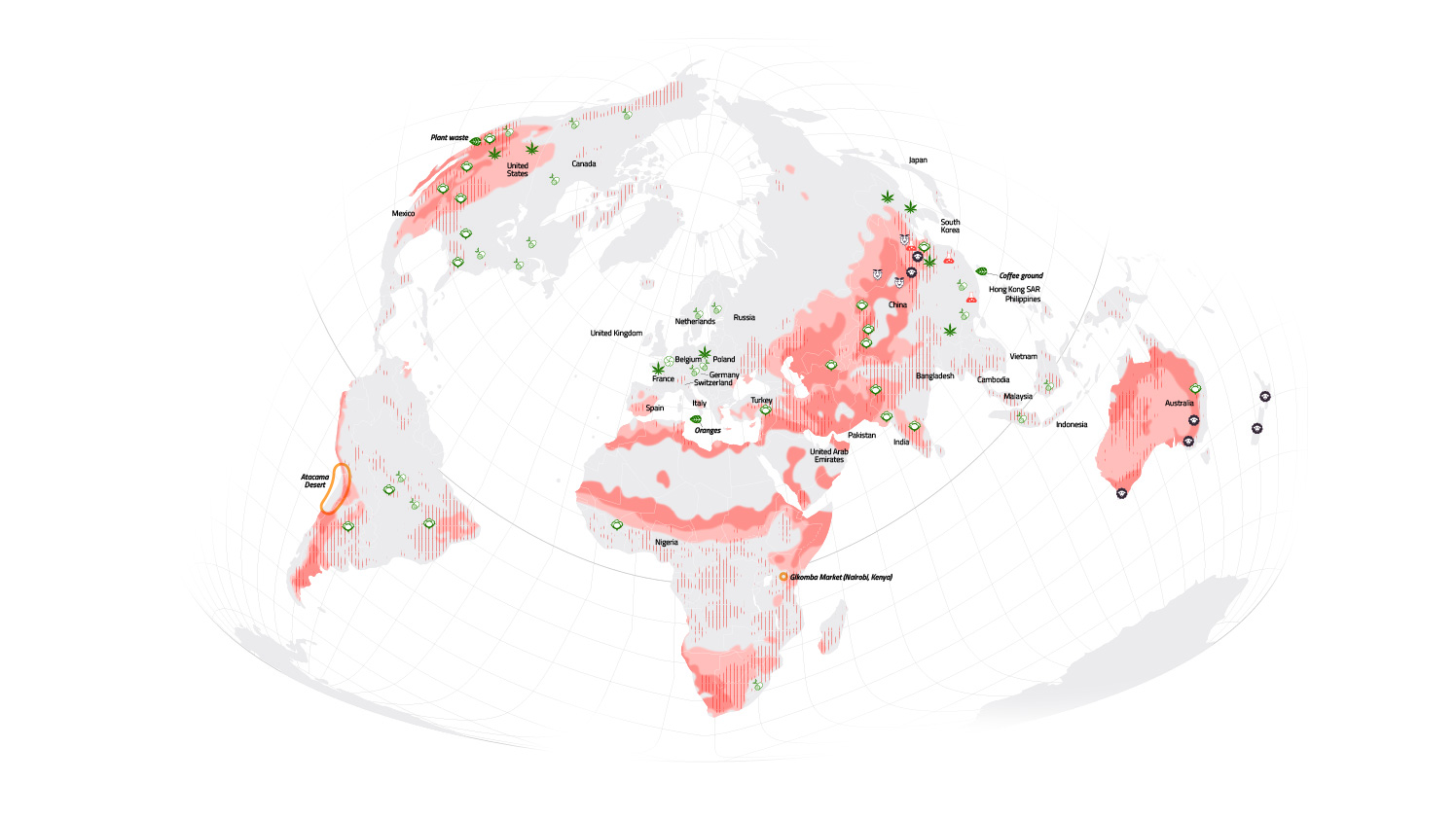
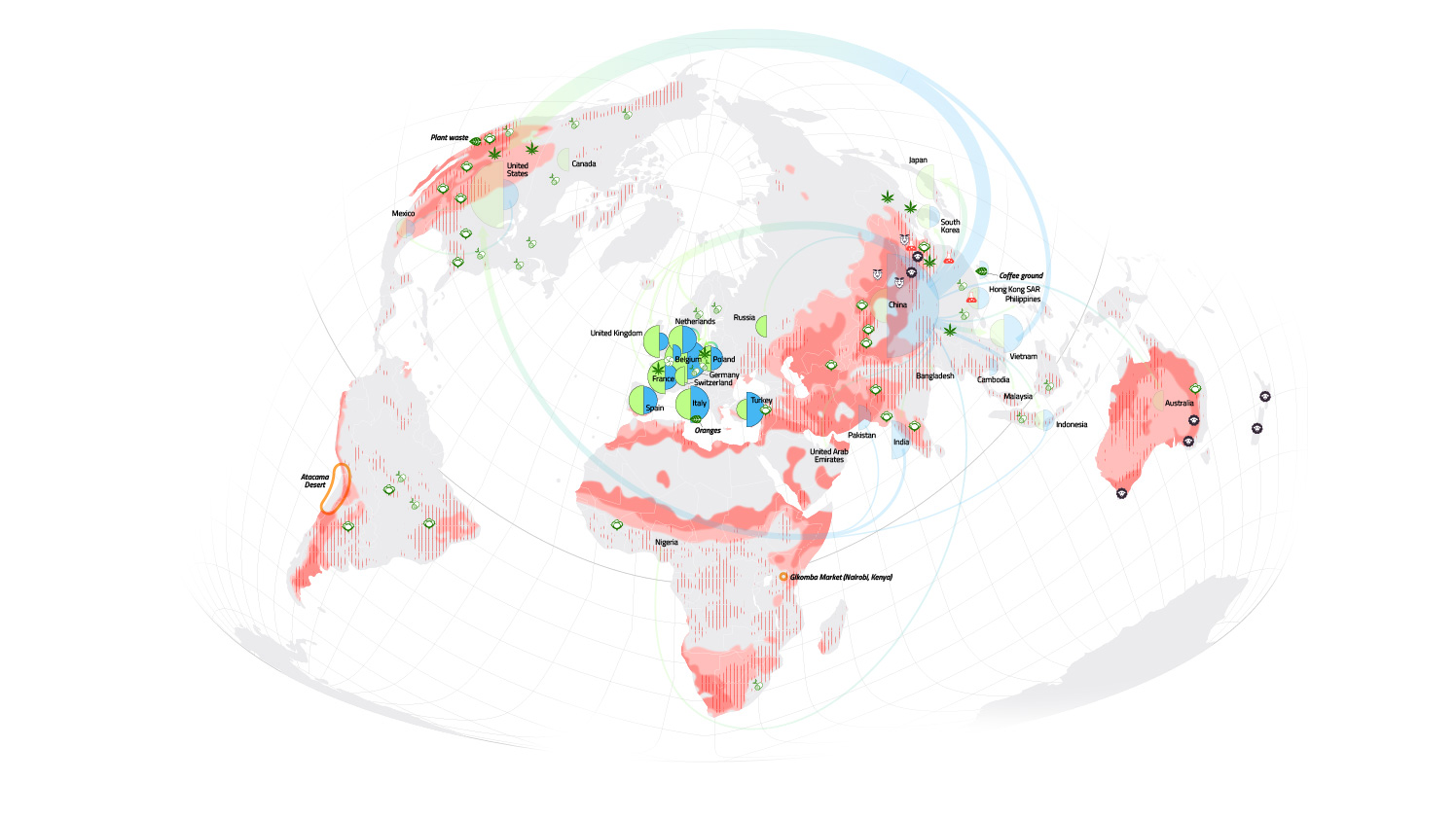
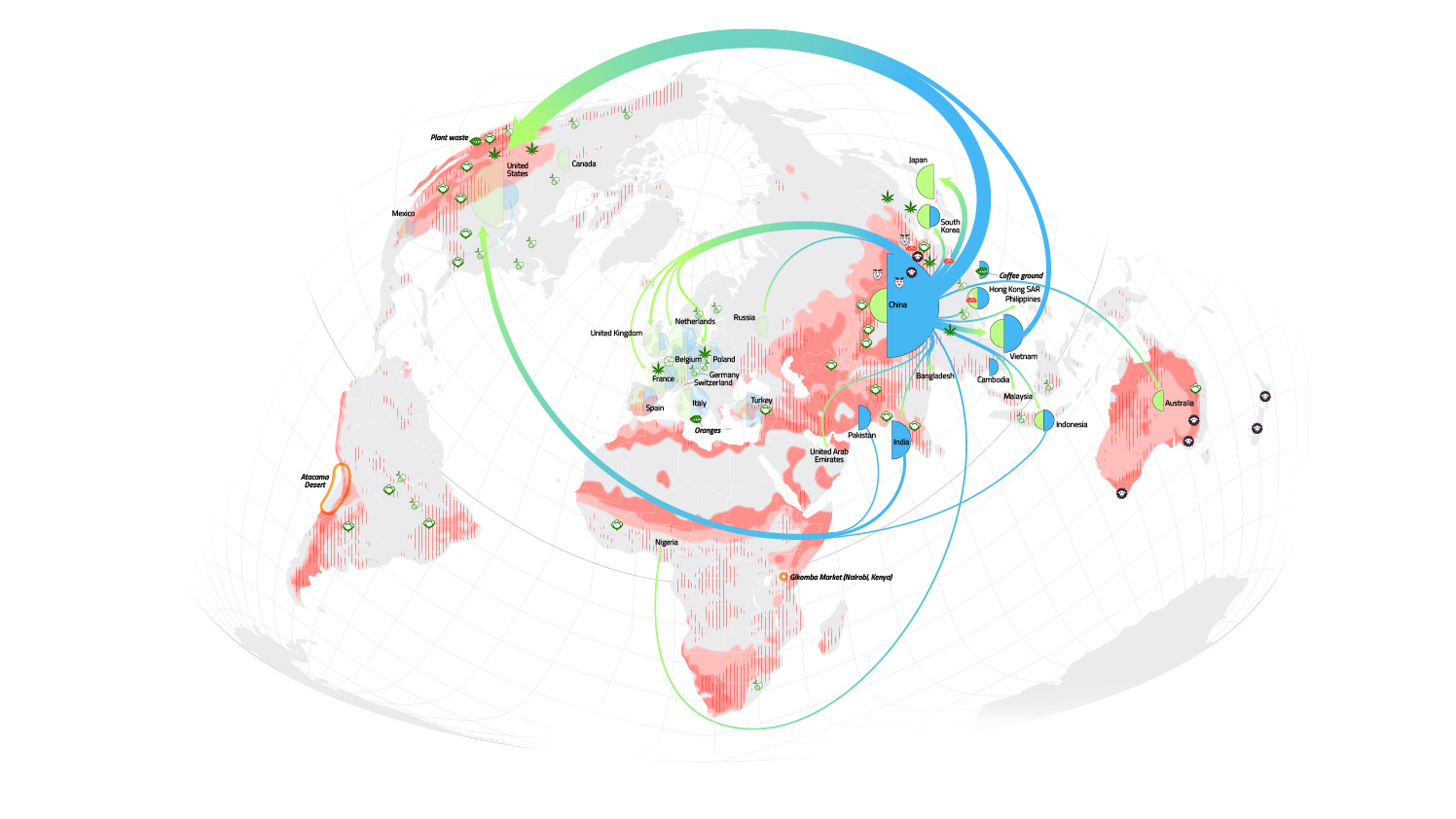
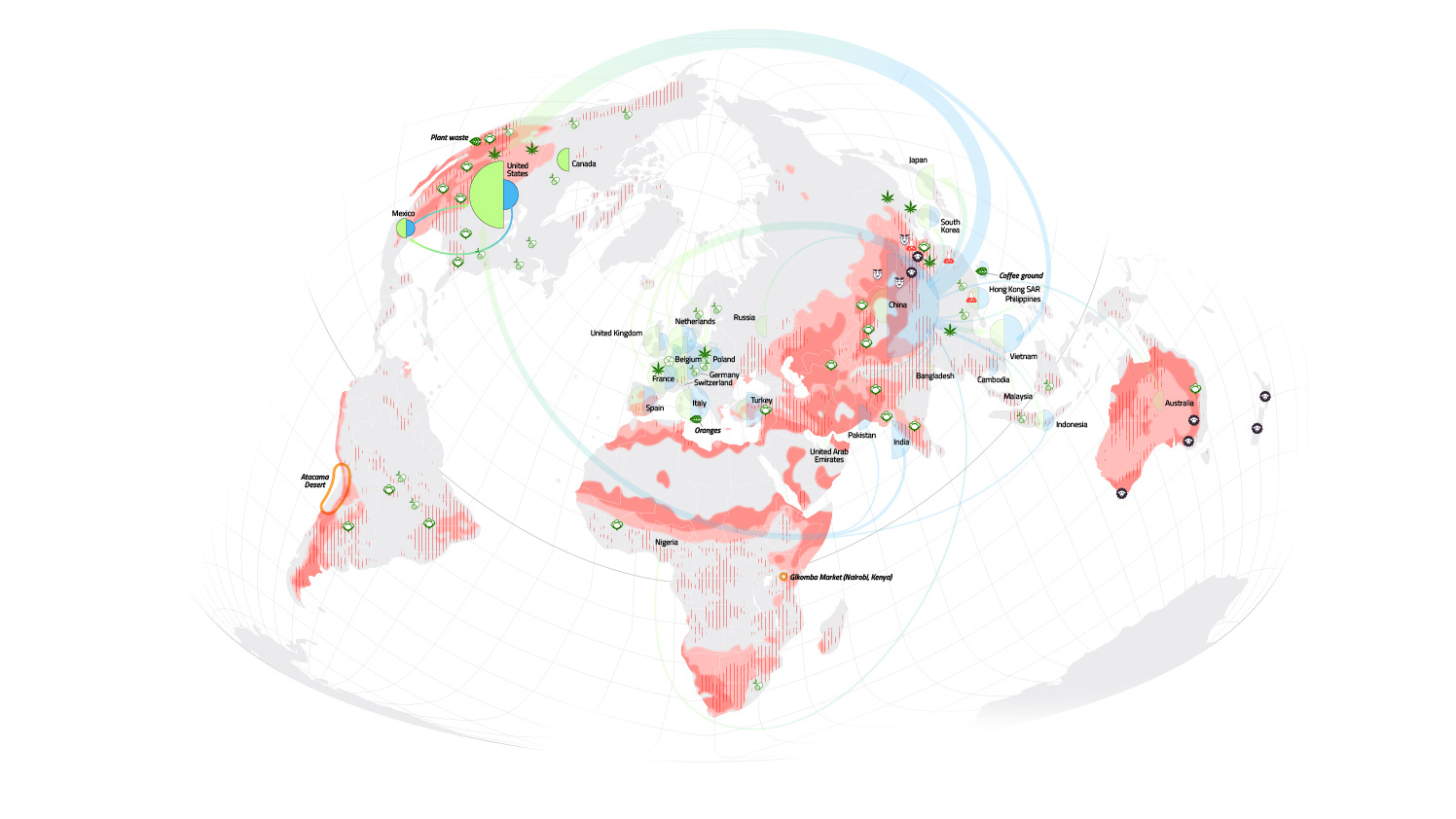
This world map shows the connections between fibre production, land degradation and the international textile trade: While trade and manufacturing is concentrated on the Asia-Europe-North Africa axis, fibre production and land degradation is global.
Europe:

Europe experiences a fairly even split between import and export activities, including the trade of cotton, flax, hemp, man-made celluolsic fibres and agricultural waste fibres - namely oranges.

Asia:

The heaviest textile trade flows originate in Asia, where we see the export of cashmere, wool, cotton, polyester and polyamide, hemp, and agricultural waste fibres from coffee grounds.

North America:

Large proportions of imports head toward North America from Asia, including cotton, hemp, man-made celluolsic fibres and agricultural waste fibres like plant waste.

Case studies
Case studies

The answer to “who are you wearing” is unequivocal: land.

By focusing on fashion's impact on land, we can promote more sustainable practices that protect the environment, conserve biodiversity, generate sustainable livelihoods, and ensure that land remains productive for generations to come. We hope that this publication inspires government and business decision-makers, as well as all of us fashion lovers and consumers, to create a more sustainable and land-friendly fashion industry.

The United Nations Convention to Combat Desertification (UNCCD) is working to raise awareness, promote sustainable practices, and advocate for policies that protect land from the harmful effects of fashion’s supply chains. Through innovation, responsible sourcing, and circular economy models, the industry can shift toward regenerating land instead of degrading it. For more resources, explore the UNCCD’s engagement with fashion and land sustainability.